

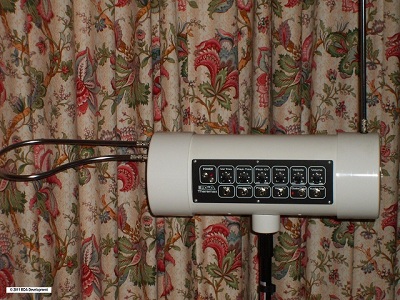
After catching a glimpse and hearing a Theremin on youtube.com, I was hooked. The sound is a like nothing I had ever heard before. I recommend that anyone interested in building/playing one to research and explore all information about them. You do not just “play” a Theremin; you “Express” yourself through the instrument.
To start with I ordered a B3 Deluxe Theremin from soundslikeburnes.com, which is a great Theremin for the price. After a week or two of getting to “Know” it I realized I had to build one from the ground up. In order to express yourself through the instrument, it’s best to grow together during the building process.
I discovered the PAiA kit at paia.com. I would have designed the circuit from scratch, but have no electronics background at all. As a side note, the PAiA assembly instructions are complete and easy to follow, but read through them several times before starting and FOLLOW their steps to the letter.
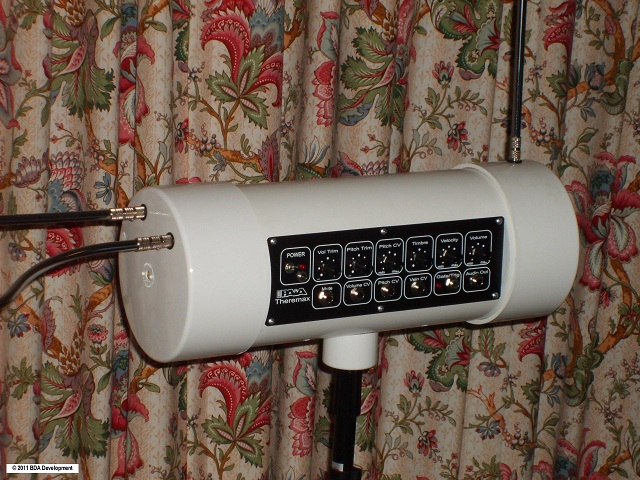
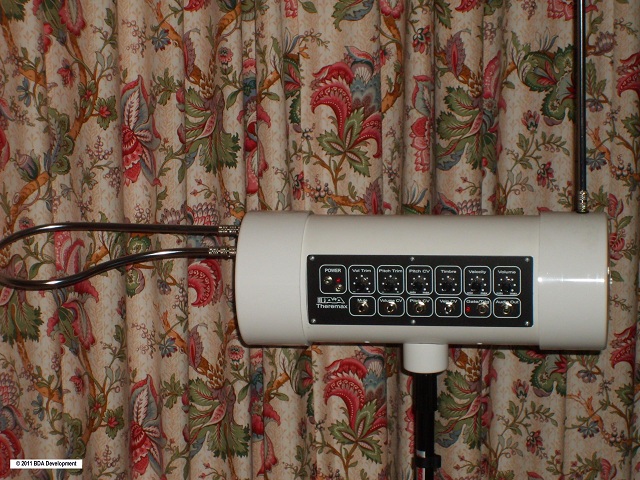
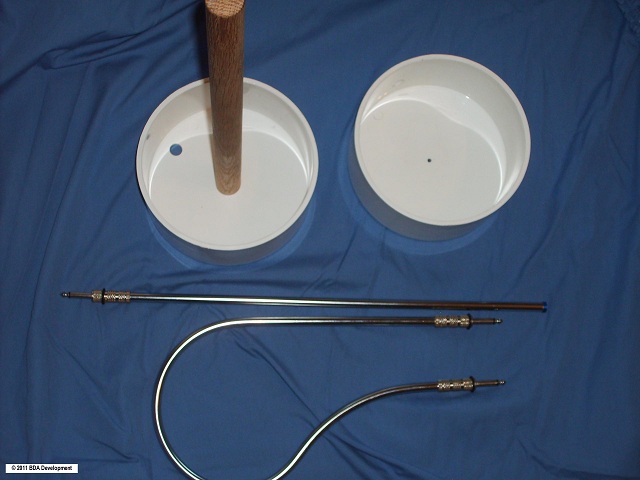
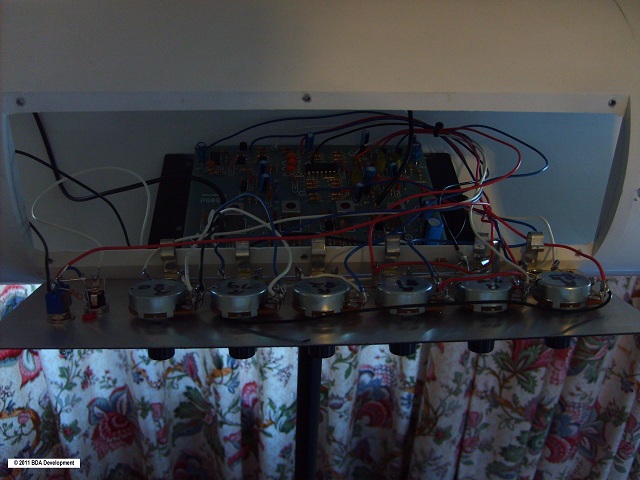
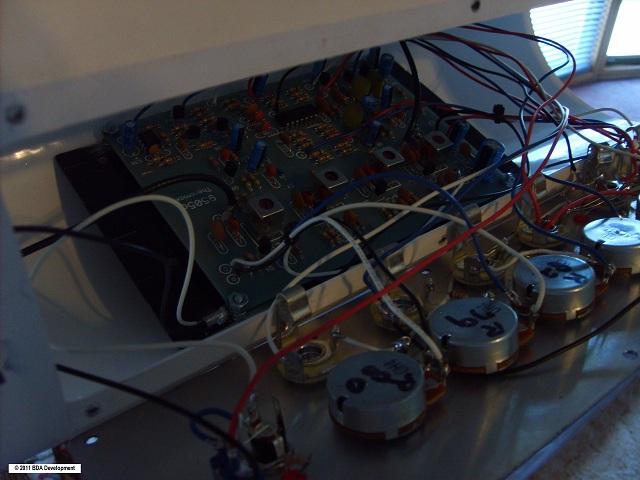
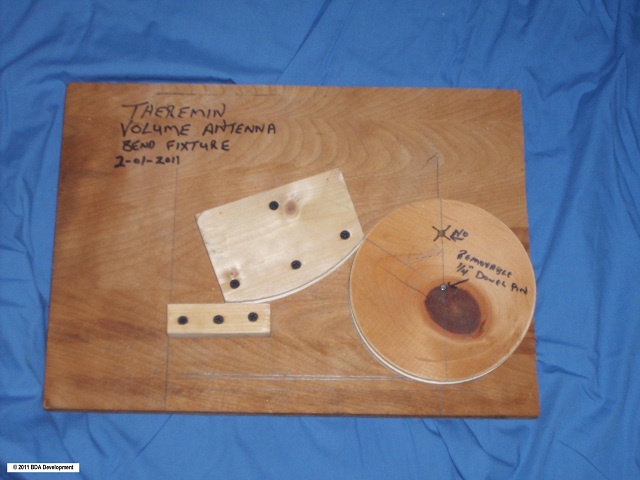
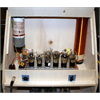
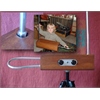
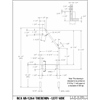
The entire case was designed with a drafting program and starts out with 6” sch40 PVC drain pipe with end caps and 1 ?” cap for the mike stand fitting. All of the case and antenna materials were purchased from Home Depot. The only “electrical” change I made from the PAiA kit, was I added a disconnect fitting for the power supply. The antenna incorporate ?” guitar plugs (from Radio Shack) to allow easy removal for transporting.
I could go on and on about the building and playing/expressing with the Theremin, and would be more than happy to share any and all the information I have. Just E-mail me. dda1800@comcast.net.
In the Lords Service:
Dana Abbott
PS. I would love to see someone build this out of all wood instead of PVC, maybe Cherry, Oak, or Walnut. I have a full set of drawings (A-Cad 2006) that I will be more than happy to provide.





Feeds:
Showing 13 Comments
I believe this is the first example of PVC pipe actually being used as an enclosure. I had the same idea years ago, although I never had the need to implement it. I believe PVC pipe is capable of holding an electrostatic charge, so I hope this won't become an issue.
The idea to use a 1/4" plug/jack for the antenna mounting is a great idea but not novel. The 2004 Moog Etherwave Pro uses this method for mounting the volume antenna.
Still, in this case, all of these ideas have been nicely executed.
Being a retired toolmaker, I have to assume he(?) had an adapter made to go from the coarse pipe thread to the fine, straight thread on the microphone stand.
The mike stand adapter is not threaded, but is drilled out to slip over the stand, the pics don't show the inside of the adapter. The adapter is mounted to the case with 1/4-20 flat head cap screws. The hole for the stand does not go through the case. The pipe cap on the outside is for looks only. And yes I am a "He"(I have never been crazy about my first name). Since I mentioned in the article about making one in wood --- I have started to design it, if all goes well it may be done in a few months.
Thanks for your reply - SewerPipe
Forgot to state the case is grounded to the ground of the circuit so static electricity has not been a problem. The sound (I think) is superior to the B-3, and seams to be a little easier to play, but only being a "newbie" to theremins I can't judge with any authority.
-SewerPipe
BTW...I would assume the mike stand would bleed off any static charge that might build up on the PVC, but what do I know.
The Theremax kit I bought from PAiA in the kit form.
I did the "upgrade" that came with the kit. Did the upgrade during the original assembly so don't know if it improved the sound, as I haven't heard it without the upgrade.
Just want to mention I "looked under the hood" of the B-3 that I started with as a already complete Theremin. SURPRISE SURPRISE, would like to know if anyone else has done the same?
Dana (aka SewerPipe)
First let me make a correction -- The Theremin is a B-3 Deluxe -- not the shorter B-3. With that said I would recommend you open yours up and take a look. Since I am not schooled in electronic assembly or lay out it would be foolish of me to comment. Lets just say the "neatness" of it is a far cry from the finished kit from PAiA. Please don't get me wrong, the B-3 is in my opinion a great sounding Theremin for the money.
But down the line If I were to have a problem with it there would be no way I could be "talked" through a possible repair solution. With the PAiA Theremax there would be a better chance, that is for a novice like me.If you do attempt to open yours up, make sure to run a exact o knife along the joints. Mine appeared to have spots of "hot glue" in a few places.
The only real comment I have is, it's amazing to me how much difference there is in the quantity of parts there is between the B-3 and the Theremax. Maybe one will out last the other by twice as long. Maybe it takes a "lot" more parts to improve the sound by a factor of 3 or 4.
In ether case I am happy with both of them and would in no way want to detour someone from buying them. Well hope I haven't offended anyone with my newbie rantings.
-Dana
"Jeff S: I believe this is the first example of PVC pipe actually being used as an enclosure."
PVC maybe yes, Acryl no: some subscope enclosures (http://www.subscope.de/theremin.html)
Cheers,
Dominik
I must say your theremins do have a nice "musical" low end sound.
In regards to the tubular cabinet...
I do wonder why you decided to install the circuit board and user controls in their typical horizontal configuation when you were not constrained by a rectangular box. The problem with this is that the controls are pointing at the players belly, and one has to bend over to see/read the controls properly. With a cylindrical enclosure, it would be no problem to orient the controls so they are easily seen by a standing player.
However, this could be an issue for the Theremax because of the front panel jacks.
I replied to your post, but for some reason when I clicked the "post" button - it didn't. Hope I don't end up with a dbl post.
As I posted the first try. The acrylic Theremin is a work of art, as are all of them. For the question as to not locating the controls in a more "viewable" location. My opinion would be to silkscreen legends in the desired location, with lines or arrows going to the proper control. This opinion is in no way finding fault as to the way it is built now. You and I know (having actually built) cylindrical Theremins, the obstacles that had to be considered in the actual build.
Thanks for your kind comment on my sewer pipe Theremin.
Dana/SewerPipe
Yes, that is certainly a feasible work-around, and frankly I don't understand why this is not done to all rectangular box theremins.
I've been a draftsman for most of my working life. I know that working within a circular tube is the same no matter what angle you are at. Of course, in this case, that's assuming any input/output jacks are not mounted on the PC board - which they are not on the Subscope T3, for example. If so, cannot the controls be mounted off board?
Asking questions and proposing alternatives should not be construed as "finding fault". Otherwise, it would be impossible to have an intelligent discussion.
It does distort and the short spring might be not too bad for a Cello-like resonance.
Reading your questions about the locations of controls and silk-screen i hear me asking the same questions.. I never thought about that cause i know without reading which knob controls which feature, i guess. I will think about the architecture of mic-stand adapter, PCB and sockets in a new way. Though right-angled jacks fit well and operation of the controls work fine with me. The PCB being installed say at an angle of 45 degrees might be aesthetically. BUT the silk-screen definately is being displaced!
Process of building is kind of putting a bottle-ship together. I wonder how you calibrate your piped Theremax. Eventually i drilled holes for the srewdriver in the tube to do so.
Finally the acrylic tube was an invitation for some build-in LEDs illuminated proportional to the volume.
Dominik
After the build was complete, I left the faceplate assembly hanging out the front and calibrated the unit per the instructions. It was a little tight reaching in the front to get to the PC board, but the board is mounted at a 20degree. angle of parallel to the world. (hope that makes sense)
I had rotated the board to get a little more distance from the back of the face plate, PAiA told me the farther the PC board and the face plate the better. I think a lot of the way it all came together was by chance and not due to any knowledge on my part. In any case after the calibration I screwed the face plate on --- and it worked the first try:-) I have accepted the fact that the next one I design and build, will probably take HOURS & HOURS to get calibrated.
The more I read about the electrical part, it is apparent a lot of small things can stop a Theremin from working properly.
I would still like to build one out of cylindrical glass, or crystal, but I can't afford to purchase the raw material. Although there was a Pyrex bread baking tube on e bay the other day.
The price wasn't bad but I didn't know the diameter or the length. I always keep my eye open for stuff like that. You never know what is just around the corner as far as a Theremin goes.
Have a Blessed day-
Dana/SewerPipe